

Levelling Boards For Flooring
No matter what flooring type you put down, you will always have to ensure that it is applied to a level surface in order to have a stable and visually pleasing end result. Whilst some subfloors can be cleaned and are considered level, many are not. Some have visible imperfections such as cracks, dips, bumps or uneven joints which must be corrected before installation. If these issues aren’t addressed, the finished floor may feel uneven, wear prematurely or look visually distorted.
Levelling boards—most commonly Jumpax Basic or flooring‑grade plywood are the two main dry floor‑levelling systems used in the UK. Both are ideal when imperfections are too significant for an underlay alone but not severe enough to require a full screed or levelling compound.
Learn more about Levelling Boards For Flooring
No matter what flooring type you put down, you will always have to ensure that it is applied to a level surface in order to have a stable and visually pleasing end result. Whilst some subfloors can be cleaned and are considered level, many are not. Some have visible imperfections such as cracks, dips, bumps or uneven joints which must be corrected before installation. If these issues aren’t addressed, the finished floor may feel uneven, wear prematurely or look visually distorted.
Levelling boards—most commonly Jumpax Basic or flooring‑grade plywood are the two main dry floor‑levelling systems used in the UK. Both are ideal when imperfections are too significant for an underlay alone but not severe enough to require a full screed or levelling compound.
What are the differences?
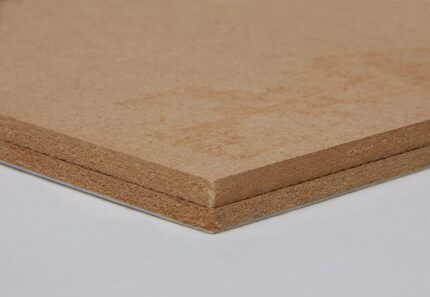
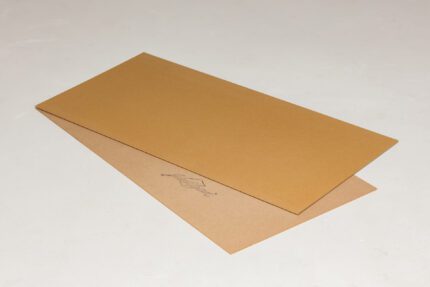
Many fitters think of levelling boards as rigid sheets fixed down with nails or screws. This is true for flooring‑grade plywood, but Jumpax Basic works very differently. Jumpax is not a structural stiffener and is not mechanically fixed. It is a floating, dual‑layer levelling system made of a 3mm high‑density MDF top layer and a 4mm soft fibreboard base layer. Installed in a floating configuration, it is designed to address minor subfloor unevenness while improving acoustics and providing an excellent surface for LVT/LVP, laminate and engineered wood.
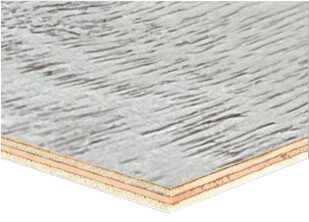
Flooring‑grade plywood, typically 5.5 to 6 mm, 9 mm or 12 mm, is used when a stable, rigid and reinforced surface is required. It is the preferred option when the subfloor needs screw‑fixed strengthening, when installing vinyl sheet (which highlights minor imperfections), or when the surface needs to be structurally stable rather than just visually level. Plywood not only corrects unevenness but also reinforces weak timber floors—something Jumpax does not do.
Are floor levelling boards only suitable for wood floors?
Levelling boards can be used with most flooring types; however, they are not suitable for nail‑down solid wood flooring, which must be fixed directly into structural timber.
How to level a floor without floor levelling compounds?
Installing levelling boards is one of the most effective ways to level a wood or concrete floor without using a self‑levelling compound.
When using flooring‑grade plywood, use a pipe and cable detector before nailing or screwing into wooden floors. On concrete, you may use a suitable adhesive instead of masonry nails. Plywood acts as a rigid covering over the existing surface, smoothing out small dips, uneven joints and inconsistencies.
When using Jumpax Basic, no nails, screws or adhesives are required. The two layers float over the subfloor and lock together to create a new, perfectly smooth surface. Jumpax is suitable for minor to moderate unevenness but is not intended to correct deep dips or structural issues.
In more severe cases, full screeding, patching or structural plywood replacement may still be necessary.
Levelling boards and underlayments serve similar functions but are not the same:
- Levelling Board – Used to create a flat, smooth surface above the subfloor so that the final installation is free from imperfections. They may be made from plywood, OSB or specialist MDF boards such as Jumpax Basic.
- Underlayment – Primarily serves as a comfort, acoustic, insulation or moisture‑protection layer rather than a levelling solution. Underlays cannot correct uneven subfloors.
Using levelling boards instead of traditional wet screeds or compounds offers several advantages:
- Faster installation – Levelling boards, including Jumpax Basic, require no drying time. You can install flooring immediately.
- Cleaner process – No wet compounds or mixing, making the process easier and less messy.
- Consistent surface – Factory‑made boards provide a uniform finish with minimal effort.
- Acoustic and thermal improvements – Products such as Jumpax Basic offer built‑in acoustic benefits, while plywood provides a stable thermal surface. (Note: not all boards provide insulation—this depends on the product.)
- Reduced weight – Levelling boards are far lighter than screeds, reducing overall structural load.
- Compatibility – Suitable for most flooring types (with the exception of nail‑down wood flooring).
- Customisation – Easily cut and shaped for irregular rooms.
- Lower environmental impact – Many modern levelling systems, including Jumpax, use responsibly sourced or recycled materials.
Several factors dictate which levelling solution you should choose:
- Nature of imperfections – For minor irregularities, thin boards such as 5.5 to 6 mm plywood or the 7 mm Jumpax Basic system may be sufficient. For moderate imperfections, thicker plywood (9 to 12 mm) may be required. Significant depressions must be corrected before installation.
- Type of finished flooring – Vinyl sheet typically requires plywood for the smoothest finish. LVT, laminate and engineered wood work well with both plywood and Jumpax Basic.
- Load‑bearing requirements – Rooms with heavy appliances (e.g., kitchens) often benefit from the structural reinforcement of plywood.
- Subfloor material and condition – Concrete generally requires less thickness for levelling than flexible timber floors, although Jumpax Basic works well on both.
- Transitions to adjacent rooms – Always consider how much the levelling board will raise the floor to avoid creating tripping hazards.
Compatibility depends on the material.
Jumpax Basic has a low TOG value (0.7) and is suitable for use over underfloor heating systems, allowing efficient heat transfer.
Flooring‑grade plywood has higher thermal resistance and may reduce heating efficiency, so it should be used with caution over UFH.
Our complete subfloor levelling system, Jumpax Basic, is designed to provide quick, clean and cost‑effective levelling. Made from lightweight MDF and fibreboard, it can be used in both domestic and commercial settings and offers sound‑reduction benefits as well as compatibility with underfloor heating.
With a low 0.7 TOG rating, Jumpax Basic is ideal for UFH installations. The combined 7mm thickness (3mm top layer + 4mm base layer) is suitable for most levelling projects where full screeding is not required.
We also offer flooring grade plywood manufactured from high quality Malaysian hardwood, making it extremely durable and resistant to indentation and therefore fit for the demands of the majority of flooring installations.