


Blog
Do You Need Underlay for Artificial Grass? Everything You Need to Know
Do You Need Underlay for Artificial Grass?
Does artificial grass need underlay? The short answer is yes. A high-quality artificial grass underlay makes a big difference in ensuring the durability, comfort and optimal performance of synthetic grass.
Using the right underlay for artificial grass lawns helps to create a smooth, long-lasting finish. It improves cushioning, keeps the turf feeling soft – particularly important if it’s positioned in busy areas – and supports better drainage.
What is Artificial Grass Underlay?
Artificial grass underlay is an unseen, functional layer of foam or shock pad material installed between the subbase and the artificial turf. Foam underlay for artificial grass is the most popular type, and it’s commonly used to provide artificial grass with padding, or to prevent streaking if the turf is laid onto a hard surface.
FlowWave is an artificial grass underlay with drainage holes. Manufactured from 8mm XPE (cross-linked polyethylene) closed-cell foam, it’s covered with small holes for drainage throughout. Closed-cell simply means that the underlay doesn’t absorb water – water drains through rather than soaking into it.
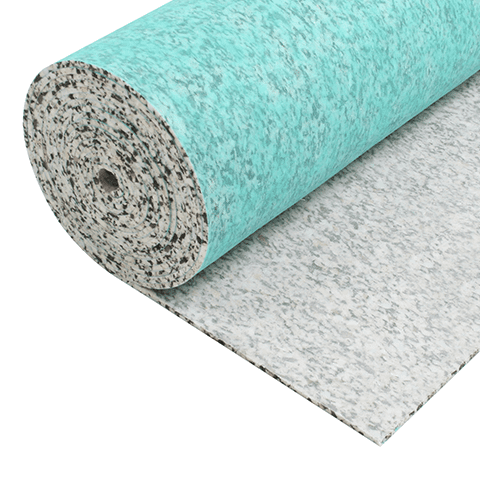
Artificial grass drainage underlay is very different from internal carpet, felt, or rubber underlay. These are unsuitable for use underneath artificial grass because they absorb water, become compressed, and rot over time.
Do You Actually Need Underlay for Artificial Grass?
A question often asked is do I need underlay for artificial grass? And the answer is yes,yes; on most surfaces it’s a necessity. Underlay provides comfort underfoot, which is essential on hard surfaces. Artificial grass laid on bare concrete without underlay feels rigid, unpleasant and miles away from the feel of natural grass. Artificial grass shock pad underlay provides shock absorption to artificial turf, which is invaluable if children or pets are using the space.
Underlay with drainage holes prevents water pooling on the surface of the artificial grass and keeps the subbase healthy. If you’re still asking, does artificial grass need underlay, consider that underlay also provides longevity by protecting the grass backing from abrasion against rough surfaces.
On well-prepared soil or sand, some installers skip underlay. But even on soft soil, the comfort and drainage benefits of an artificial drainage underlay like FlowWave make it a worthwhile addition to your space.
Do You Need Underlay for Artificial Grass on Concrete?
Yes, underlay for artificial grass on concrete is absolutely essential. Concrete is a hard, demanding surface. It has zero give, no natural drainage and is rigid underfoot. Without artificial grass underlay for concrete, the turf quickly becomes uncomfortable and water-logged, since the water has nowhere to go.
On concrete, FlowWave’s drainage holes truly come into their own. Because water can’t naturally soak through the artificial grass and into the ground below, FlowWave’s drainage channel actually runs through the underlay itself. The product offers a means for drainage even on concrete.
From a practical standpoint, underlay is usually secured onto concrete using specialist adhesive around the perimeter, rather than with nails. This is the best way to ensure that the turf remains securely in place.
Do You Need Underlay for Artificial Grass on Decking?
Again, the answer is yes but the main reason to use underlay for artificial grass on decking is for drainage. Decking boards have gaps that allow some drainage, but without an underlay that siphons the water away, it can still pool under the grass, causing the decking to rot faster.
XPE foam is a great artificial underlay for decking choice because it’s able to accommodate the expansion and contraction of the decking wood shifting with temperature changes, all without the XPE cracking or shifting itself, unlike more rigid forms of underlay would.
Decking is certainly softer than concrete, but still a firm surface that benefits from the comfort and cushioning that artificial grass underlay provides. Wooden decking allows for underlay to be secured with nails or staples. However, when installing underlay onto decking, adhere to best practice and ensure that underlay joins are offset from deck board joins.
What Type of Underlay Should You Use?
There are two main types of outdoor underlay on the market: artificial grass foam underlay and artificial grass shock pad underlay. FlowWave is an XPE closed-cell foam underlay, which offers excellent drainage for artificial turf. Shock pad underlay is typically thicker than foam and offers higher impact absorption. It’s often used for play areas and sports pitches.
Shock pad underlay is also the underlay of choice formore common in large commercial installations, whereas for most residential gardens, 8mm foam underlay for artificial grass is the right option. FlowWave 8mm XPE closed-cell foam is UV resistant, and drainage holes throughout make it suitable for all common residential surfaces: concrete, decking, soil and sand.
It’s worth repeating what not to use for artificial grass underlay. Rubber, carpet, felt and fleece – anything used underneath household carpets – are unsuitable. They absorb moisture, compress under load, and will degrade the artificial grass above them.
How to Lay Artificial Grass Underlay
Here’s a simple step-by-step guide on how to lay underlay for artificial grass, including key watchouts and best practice tips.
- Ensure the subbase is level and compacted before laying artificial grass with underlay.
- Make sure to roll out the underlay in the same direction as the artificial grass pile.
- Trim underlay to fit using a sharp utility knife.
- Secure the underlay with the appropriate fixings: nails or pegs for soil and sand; specialist adhesive on concrete and hard surfaces.
- Butts should be joined together neatly. Be careful not to overlap them.
- For a more premium finish, offset the underlay joins from any joins in the grass above.
Ready to lay? FlowWave’s 8mm XPE underlay is available in all standard widths. Shop here.
FAQs
- Does artificial grass need underlay on concrete?
Yes, it’s strongly recommended. Concrete has no give and no natural drainage. An 8mm XPE foam underlay with drainage holes, like FlowWave, provides additional cushioning and allows water to channel away from the artificial grass surface.
- What is the best underlay for artificial grass?
XPE closed-cell foam is the best choice for most residential gardens. It doesn’t absorb water, is UV resistant, and provides consistent cushioning underfoot. Always avoid carpet, rubber, or felt underlays outdoors, these absorb moisture and will degrade over time.
- Can you lay artificial grass without underlay
Yes, you can, but it isn’t recommended on hard surfaces. Used on concrete or decking without underlay, artificial grass sits directly on a rigid surface. It’s not only uncomfortable underfoot, but under foot but will also wear faster at pressure points.