

Blog
What Is A Carpet Gripper? Fitting Carpet Gripper Guidance
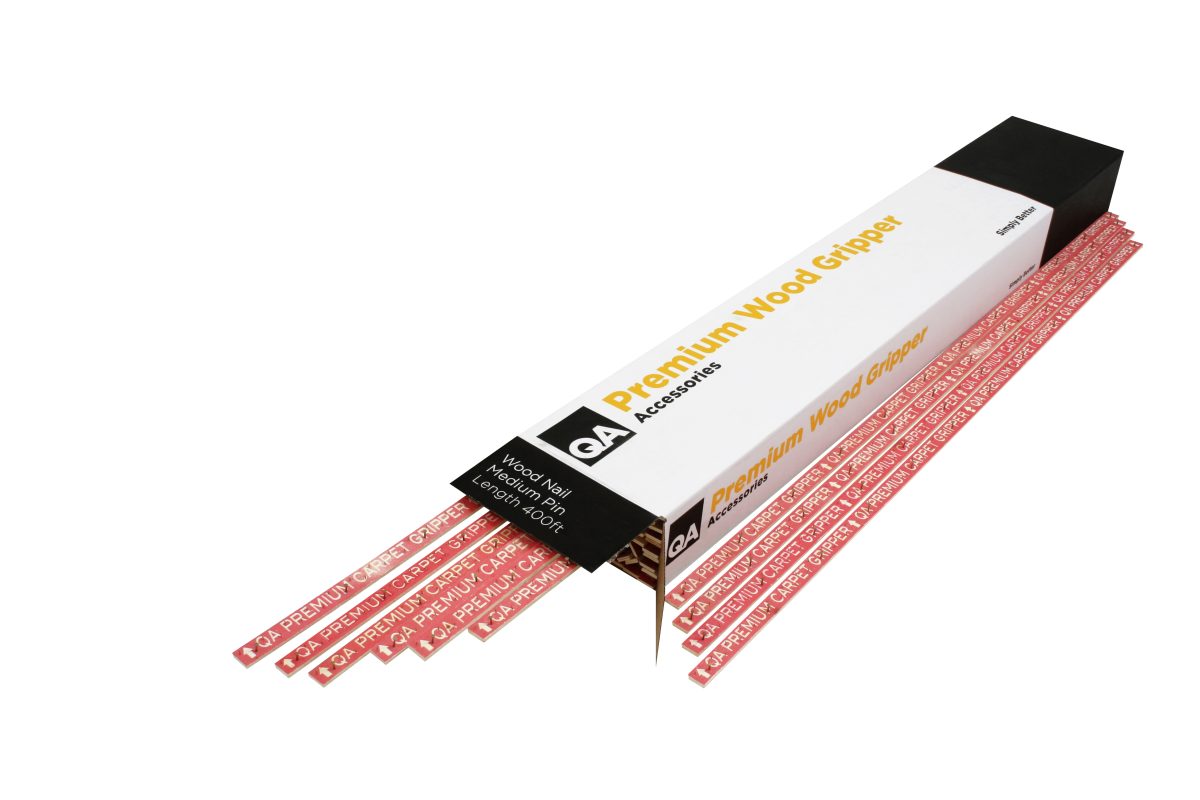
Carpet grippers, carpet gripper rods, and tack or tackless strips are all different terms for the same thing: grips fitted around the perimeter of a room to stop carpet bunching and shifting over time.
This guide answers what carpet grippers are, explains how to fit them, outlines the best way to cut them, and tells you when gripper rods should be replaced.
How to fit carpet gripper
Even experienced fitters pick up new tips when it comes to fixing grippers in place. For example, do you wear knee pads? If not, they're a worthwhile investment — those grippers are sharp.
- Loose-lay the gripper rods end to end around the perimeter of the room to check you have the right amount. Use a dedicated threshold bar or door bar at doorways (see below).
- Cut the rods to size using gripper shears. Protect yourself while working — as a professional you'll know how painful those pins can be.
- Our grippers come with printed arrows. Make sure these face towards the wall.
- Fix the rods 7mm from the wall, or up to 10mm for thicker carpets.
- Check that all gripper pins angle towards the wall so the tacks can hold the carpet firmly in place.
- Once you're happy with the position, nail the gripper into wooden floorboards, or use a high-strength gripper adhesive to fix gripper to concrete subfloors.
How far from the wall should carpet gripper be?
Leave a 7mm to 10mm gap between the gripper rod and the wall — 7mm for regular carpet, up to 10mm for thicker coverings. The question is often asked about skirting boards rather than walls, but the measurement is the same.
That gap matters because it gives you space to tuck the excess carpet edge in later, for a clean finish.
How to cut carpet gripper
Always use the correct tools, and wear heavy gloves to protect against the sharp pins. We recommend cutting gripper rods with gripper shears, though multipurpose snips or a hacksaw will also do the job.
Once the rods are laid around the perimeter with the recommended 7mm to 10mm gap, mark the cutting points with a pencil, then squeeze the shears or snips to make a clean cut.
Don't run a gripper rod across a door threshold where someone might step directly onto it — the tacks are sharp. Place the rod up to the side of the door frame instead, leaving the same gap as the rest of the perimeter.
Carpet gripper at doorways and thresholds
How you handle doorways depends on what the carpet meets on the other side.
Between two carpeted rooms
Standard practice is to stop the gripper rods 6mm short of the doorway centre line on each side, so there's no gripper directly underfoot. The carpet join is then covered with a threshold bar — also called a carpet-to-carpet bar. This protects the carpet edge and gives a neat transition.
Between carpet and hard flooring
Where carpet meets wood, tile, vinyl or laminate, place grippers only on the carpet side, stopping short of the doorway itself, and finish with the correct door bar or transition strip.
If it's the last room
Where carpet finishes against a bare edge, grippers shouldn't run across the doorway. Finish the carpet neatly under a threshold strip instead.
When should you replace gripper rods?
Run through the checklist below. If you answer yes to any of these five points, it's time for new gripper rods.
Are your carpet grippers loose or moving?
If the grippers move, wobble or pull away from the floor, replace them.
Is the timber damaged?
Replace any gripper where the wood is split, warped or rotted from moisture. This matters particularly near exterior walls and on concrete subfloors.
Are the tacks rusted or missing?
If the tacks are rusted, bent or missing, the rod should be replaced.
Is the thickness or positioning wrong?
If grippers sit at the wrong distance from the wall, or don't match the height and thickness of your underlay and carpet, replacing is the easier fix.
Are you fitting new stair carpet?
Many fitters replace grippers every time they lay new underlay and carpet on stairs, purely for safety.
Grippers less than two years old with firm, upright tacks that don't tick any of the above can be reused. That said, gripper rods are cheap to replace and worn ones risk damaging or rippling a new carpet, so fitting new is usually the easier call.
Carpet gripper FAQs
What are carpet grippers?
Timber grips fitted around the perimeter of a room to stop carpet bunching and shifting over time.
How far from the skirting should carpet grippers go?
Between 7mm and 10mm. Use 7mm for regular carpets, extending to 10mm for thicker, more plush coverings.
Which way do the pins face?
The pins face upwards and angle towards the wall, so they grip the carpet backing and hold it under tension. The rod itself is nailed down into the subfloor.
Can you reuse carpet grippers?
Yes, but only if the grippers are less than two years old and have firm, upright tacks. Old or damaged grippers can damage a new carpet.
How do you cut carpet grippers?
Using gripper shears or multipurpose snips, wearing heavy gloves to protect against the sharp tacks.
What are tackless strips?
Tackless strip is another term for carpet grippers or carpet gripper rods.