


Blog
How thick is Carpet Underlay?
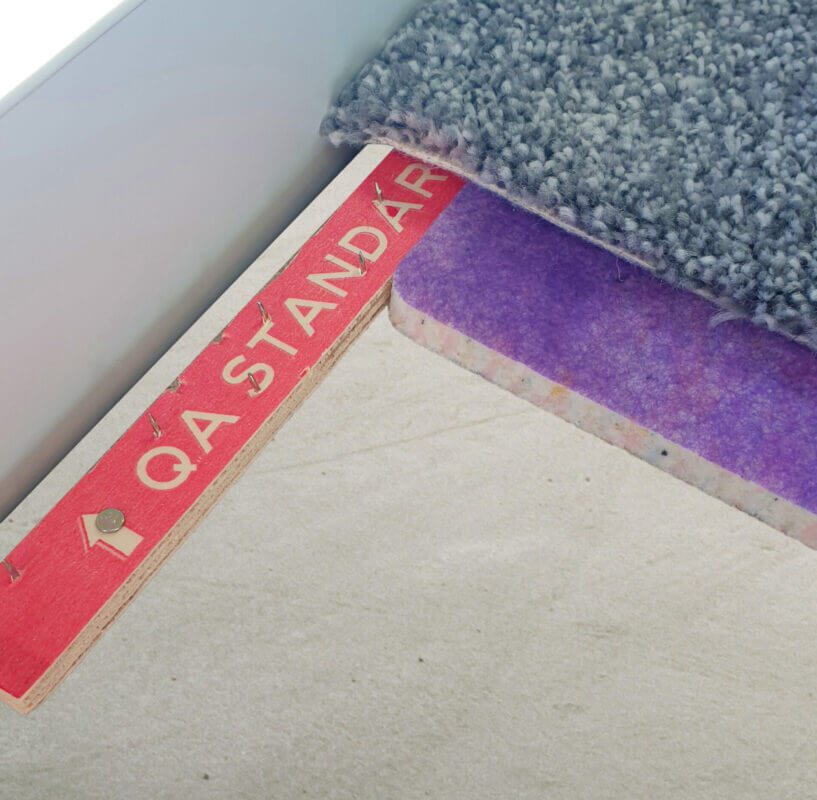
Carpet underlay ranges vary in thickness, so when selecting a new underlay for your customers, you have to consider what thickness is appropriate for them. Thick carpet underlays are often the unsung heroes of the flooring industry and bring a variety of benefits to carpet performance. Thickness typically improves comfort, while also making the carpet above less susceptible to wear and tear.
For a luxury carpet underlay, thicker options can certainly enhance comfort. Carpets can generally take thicker underlays than laminate or LVT flooring without affecting stability or how the floor feels underfoot. For example, a 12 mm carpet underlay works well for comfort and sound reduction, but using 12 mm beneath laminate flooring would often create too much movement and make the surface feel less stable.
Carpet underlays also come in different thicknesses and constructions for different purposes. Choosing the right one can make a huge difference to how your flooring performs, lasts, and feels.
So how thick are carpet underlays? How much does thickness matter, and can underlay thickness ever be “too much”? In this blog, we explore each of these questions so that you can make an informed choice and unlock the full potential of your carpet.
What does a thick underlay bring to the carpet?
Before we look at underlay thicknesses, it’s important to understand why thickness matters in the first place:
Comfort
A thicker underlay generally offers better underfoot comfort. It adds cushioning that not only softens the feel of the floor but also helps smooth out minor imperfections in the subfloor.
Durability
A quality underlay—particularly when paired with good density, helps extend the life of the carpet by absorbing impact that would otherwise be transferred directly to the carpet fibres. However, note that the underlay itself will compress and wear down over time, especially in higher-traffic areas.
Insulation
Thicker underlays can provide improved sound and heat insulation. This helps rooms retain warmth and reduces noise transfer through the floor.
How thick should the carpet underlay be?
Your ideal carpet underlay thickness depends on several factors.
Rooms
Two key elements determine the recommended thickness:
Room Use & Foot Traffic
To choose the right underlay thickness, you need to understand how the room is used and how much foot traffic it receives.
If the area doesn’t experience constant traffic, a thicker, softer underlay is often suitable. However, in high-traffic spaces, thickness alone doesn’t protect the carpet, density is the more important factor.
Underlays such as crumb rubber, sponge rubber, or felt/rubber combinations are typically denser and more durable, making them well-suited to hallways, lounges, and stairs where durability is critical.
Bedrooms are ideal for plush, thick underlays where maximum comfort is desired, and foot traffic is relatively low. By contrast, stairs and hallways require something firmer and more durable to maintain performance over time.
Carpet Type
Carpet underlay thicknesses aren’t universal because carpets themselves vary significantly.
Woven Carpets
Woven carpets—often wool or wool blends—can be more delicate. They benefit from a firm and dense underlay that supports the structure of the weave and helps maintain its integrity.
Tufted Carpets
Tufted carpets are more robust and pair well with a wider variety of underlays. Because they’re less fragile, thickness becomes more of a comfort and performance choice, except in heavy-wear areas where density is still key.
Berber Carpets
Berber (loop-pile) carpets can be sensitive to excessive softness beneath them. A thick, overly soft underlay can cause loop crushing. A thinner but denser underlay—such as crumb rubber or felt/rubber—is typically the best match.
In short, select your underlay based on the carpet’s construction and needs. Cheap underlay can undermine even a high-quality carpet, so it’s always worth choosing a product that meets industry standards.
Functionality
Beyond comfort and durability, a few practical considerations can influence your choice.
Door Clearance
Underlay thickness raises the overall height of the carpet installation. If the underlay and carpet combined are too thick, doors may scrape or fail to open properly. The ideal clearance between the bottom of the door and the finished floor is typically 12–18 mm (½–¾ inch).
You may need to choose a thinner underlay or plane the bottom of the door. Checking this beforehand avoids issues during fitting.
Conclusion
Ultimately, the appropriate thickness of carpet underlay depends on your specific situation, your room, your carpet type, and the performance you want. We hope this article has clarified the main dos and don’ts so you can select an underlay that works for you and understand why underlay thickness plays such an important role.
How thick is Carpet Underlay? – FAQs
What is the most common underlay for carpets?
PU foam underlays are the most common underlay on the market. They provide excellent heat and sound insulation, strong underfoot comfort, and good long-term value. As they’re made from recycled materials, they’re also budget-friendly and environmentally conscious.
Although PU foam is widely considered the standard choice, there are reasons to choose alternatives:
- Foot Traffic – PU foam is comfortable and reasonably durable, but in very high-traffic areas, rubber or felt/rubber underlays typically outperform it due to their higher density and resilience.
- Sound and Heat Insulation – PU foam offers strong thermal insulation, which is great for energy efficiency but can make it unsuitable for underfloor heating, where low thermal resistance is required. Rubber underlays also provide excellent sound insulation thanks to their dense structure.
Can I get a thin underlay for my thick carpet?
Many assume that a thick carpet doesn’t benefit from an underlay, or that a thin underlay won’t add anything. This isn’t true:
- Enhanced Comfort – A thin underlay can still improve the feel of a thick carpet by supporting it and reducing stress on the pile.
- Insulation – Insulation is more dependent on the material’s structure than its thickness. A thin underlay can still offer excellent thermal or acoustic performance.
- Carpet Longevity – Even if your carpet already feels plush, a good underlay helps protect it from impact and can also act as a moisture barrier beneath.